





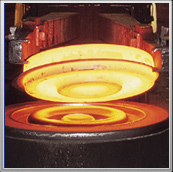
Heat treatment is a controlled transformation of metal properties through temperature exposure and cooling cycles. While the internal microstructure of a component may be the primary focus, surface integrity often determines whether the part ultimately performs as intended.
At Advanced Technical Products, we understand that preserving surface integrity during heat treatment is essential for long-term performance. Oxidation and decarburization are two mechanisms that can degrade that integrity if not controlled properly. Our engineered protective coatings that control oxidation and decarburization are designed to address these challenges at their source.
Surface Integrity as a Performance Factor
Surface integrity influences:
- Fatigue strength
- Wear resistance
- Corrosion resistance
- Fracture toughness
- Load-bearing capacity
Even when core hardness and microstructure meet specification, compromised surface properties can lead to premature failure.
Heat treatment environments expose metal surfaces to oxygen, moisture, and reactive gases. Without protection, these exposures alter surface chemistry in ways that reduce reliability.
The Metallurgical Consequences of Carbon Loss
Carbon content directly affects hardness and tensile strength in steel. During high-temperature exposure, carbon atoms near the surface may diffuse outward if the atmosphere promotes decarburization.
The result is a softened surface layer that:
- Cannot sustain intended loads
- Reduces fatigue resistance
- Requires corrective machining
- May fail prematurely under cyclic stress
For gears, springs, and load-bearing shafts, surface carbon retention is critical.
Protective coatings serve as a barrier to prevent carbon diffusion, preserving the intended hardness profile.
Scale Formation and Surface Roughness
Oxidation produces iron oxides that build up on the surface. These scale layers may flake, crack, or adhere unevenly.
Scale formation can lead to:
- Surface pitting
- Increased friction
- Coating adhesion problems in later finishing steps
- Reduced corrosion resistance
By blocking oxygen contact during heating, protective coatings minimize or eliminate scale formation, preserving surface smoothness.
Controlled Protection in Variable Furnace Conditions
Not all furnace environments are perfectly controlled. Even in atmosphere-controlled furnaces, slight variations can allow oxidation or carbon loss.
Protective coatings provide consistent protection regardless of minor fluctuations. They function as a localized barrier, reducing dependence on perfect atmospheric control.
This added layer of reliability is particularly valuable in large-scale production where variability is inevitable.
Enhancing Process Predictability
One of the primary advantages of using protective coatings is process predictability. When surface degradation is minimized, manufacturers can expect consistent hardness profiles and surface finishes.
This predictability improves:
- Quality assurance confidence
- Inspection consistency
- Production scheduling
- Long-term component reliability
Reducing surface variability simplifies downstream processes and reduces uncertainty.
Applications Across Heat-Treated Components
We apply protective coatings to a wide range of components, including:
- Aerospace structural parts
- Automotive drivetrain systems
- Industrial cutting tools
- Forged components
- Precision machined parts
Each application demands tailored protection based on temperature, exposure time, and material composition.
Minimizing Secondary Operations
Without protective coatings, manufacturers often rely on grinding or machining to remove scale and restore dimensional accuracy. These operations consume time and material.
By preventing oxidation and decarburization, protective coatings reduce the need for:
- Surface grinding
- Shot blasting
- Chemical descaling
- Corrective heat treatment cycles
This leads to higher yield and reduced operational cost.
Surface Protection as a Strategic Investment
Protective coatings are not merely a corrective measure. They are a proactive strategy for maintaining quality during heat treatment.
At Advanced Technical Products, we work closely with customers to evaluate:
- Material chemistry
- Furnace temperature ranges
- Cycle duration
- Desired surface properties
- Post-treatment requirements
Through this evaluation, we determine the appropriate protective coating strategy to preserve surface integrity.
Long-Term Reliability Begins at the Surface
Surface degradation often becomes evident only after a component has entered service. Fatigue cracks, premature wear, and reduced hardness may not be immediately visible but can compromise long-term performance.
By using engineered protective coatings that control oxidation and decarburization, we help manufacturers protect surface chemistry during heat treatment and safeguard final product performance.
Controlling surface integrity is not optional in high-performance applications. It is essential to ensuring that components meet their intended mechanical and structural demands.