

A forging lubricant starts working before the forging press does.
Before the billet reaches the die, it has already been coated, handled, heated, and exposed to an environment capable of affecting its surface. The lubricant has to survive that journey and then perform when the metal begins to move under pressure.
This is why forging lubrication cannot be evaluated only at the moment of die contact.
Advanced Technical Products manufactures water-based glass forging lubricants formulated to protect, insulate, and lubricate metals during forging and other hot-working operations. ATP’s Oxylub products are available for titanium alloys, stainless steels, and super alloys.
Before Heating: The Coating Is Applied
The process begins with application.
A forging lubricant needs to cover the intended surface in a way that fits the manufacturer’s production method.
ATP’s Oxylub coatings can be:
- Sprayed
- Dipped
- Flow coated
- Brushed
They are also available across a range of viscosities to support different workability requirements.
This gives manufacturers options based on component geometry and production setup.
A simple billet processed at high volume may need a different application method from a complex component produced in smaller batches.
During Handling: The Unfused Coating Must Survive
After application, the billet may need to be transported or loaded into a furnace.
This stage can easily be overlooked.
If the unfused coating is damaged during handling, the protective layer may become inconsistent before heating has even started.
ATP identifies green strength as one advantage of its glass forging lubricants. The coating is designed to allow billets to be loaded into the furnace without damaging the unfused layer.
That characteristic connects coating performance with a practical production requirement.
A formulation cannot support forging effectively if routine material handling removes it first.
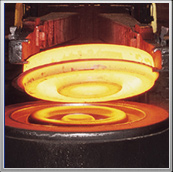
During Heating: Protection Becomes Critical
Heating exposes the metal to temperatures and gases that can affect surface condition.
ATP’s Oxylub coatings are designed to control diffusion of gases into and out of metals while helping control surface oxidation. For titanium applications, ATP also identifies retardation of hydrogen penetration as a benefit of the coating system.
This protective role occurs before the major deformation stage.
The coating therefore performs more than one function:
Before forging: protect and insulate.
During deformation: lubricate and support metal movement.
This combination is one reason glass-based forging lubricants can be useful in high-temperature forming.
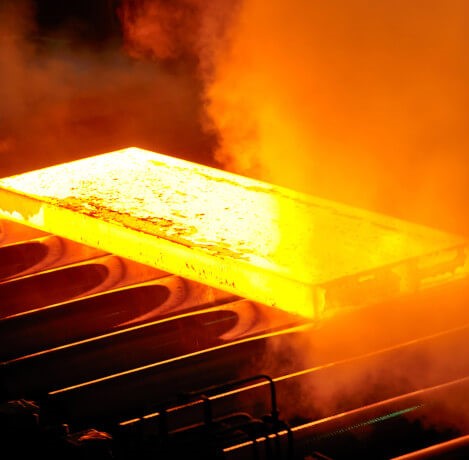
At the Press: Metal Needs to Move
Forging requires material to flow into the required shape under pressure.
Friction between hot metal and tooling can interfere with that movement.
A suitable forging lubricant helps create conditions that support metal flow while protecting the working surfaces.
ATP states that its Oxylub coatings provide lubricating properties intended to aid metal wetting and movement during hot working.
The required behavior depends on factors such as:
- Alloy
- Forging temperature
- Part geometry
- Reduction
- Die configuration
- Surface condition
- Forming sequence
That makes lubricant selection part of process engineering rather than simply a consumable purchase.
Different Metals Create Different Thermal Windows
One coating does not automatically fit every alloy.
ATP publishes hot-working ranges for several material groups within its forging-lubricant offering.
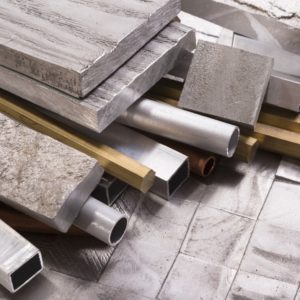
Examples include titanium alloys across different temperature ranges, super alloys from approximately 1850°F to 2100°F, and stainless steels from approximately 1900°F to 2300°F. ATP lists multiple Oxylub formulations for these conditions.
The important point is not to choose a lubricant simply because it is described as high temperature.
The formulation needs to match the actual alloy and operating range.
After Forging: Surface Condition Still Costs Money
The economics of forging continue after the part leaves the die.
Surface defects or oxidation may require operations such as:
- Pickling
- Sand blasting
- Grinding
- Other finishing work
ATP states that its glass forging lubricants are designed to help minimize surface defects and secondary finishing costs associated with these operations.
This changes how lubricant value should be considered.
The lowest coating cost per billet is not necessarily the lowest process cost.
A more useful calculation considers:
coating + application + forging + cleanup + finishing + scrap
If better surface protection reduces work later in the process, the value extends beyond the forging station.
Water-Based and Lead-Free Formulation
ATP’s Oxylub glass forging lubricants are water-based and lead-free. ATP describes them as formulated to minimize concerns associated with solvents and hazardous materials while remaining adjustable to specific hot-working requirements.
That flexibility includes custom formulation for challenging hot-working operations and non-wetting requirements.
Again, the objective is not to force every forging process into one standard coating.
The coating can be adjusted around the process.
Follow the Billet, Not Just the Specification Sheet
A successful forging lubricant must perform through several stages:
Application → handling → furnace heating → deformation → surface finishing
Problems at any one stage can affect the final result.
A coating with good lubrication but weak handling characteristics may be damaged before reaching the furnace.
A coating that survives heating but does not support metal movement may create problems during forming.
A system that performs during forging but leaves excessive surface defects can increase downstream finishing work.
At Advanced Technical Products, our glass forging lubricants are formulated to protect, insulate, and lubricate titanium alloys, stainless steels, super alloys, and other hot-worked metals while supporting practical application and handling requirements.
Evaluating the lubricant across the complete hot-working sequence provides a better picture of its value than looking at one property in isolation.