





Heat treatment often involves creating different properties within the same component. One area may need a hardened surface for wear resistance, while another must remain machinable or retain different mechanical characteristics.
That creates an important manufacturing question: how do you control where surface hardening occurs?
Stop-off coatings provide one answer.
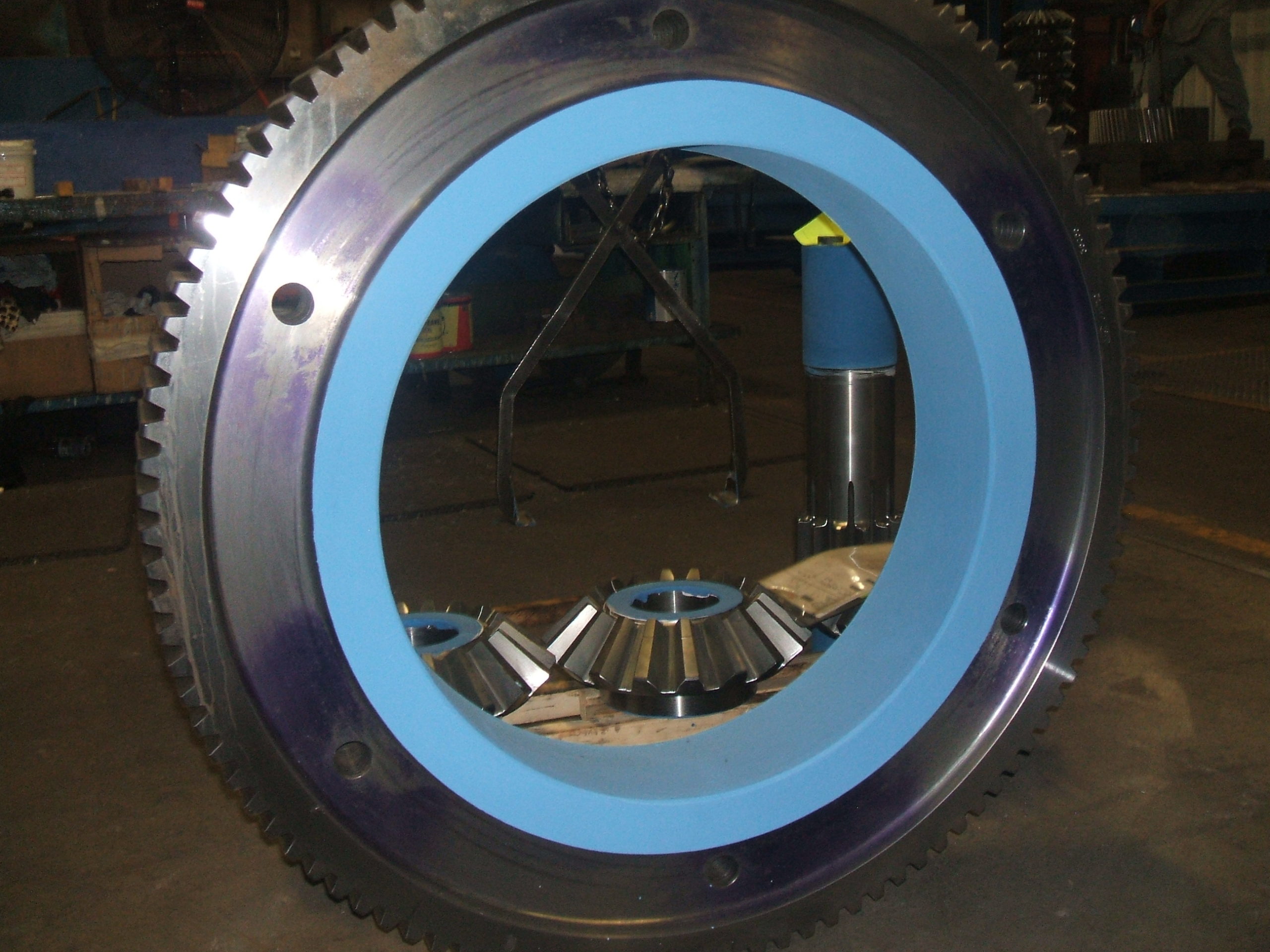
Advanced Technical Products manufactures water-based stop-off coatings designed to create a protective mask on selected surfaces during heat treatment. ATP’s Metseal products are formulated for processes including gas nitriding, ion or plasma nitriding, and gas carburizing.
Learn more about ATP’s Water-Based Stop-Off Coatings.
Begin Before the Part Enters the Furnace
Selective hardening starts before heat treatment.
Engineers first need to identify which surfaces should be exposed to the treatment atmosphere and which areas need protection.
Depending on the component, protected areas might include:
- Threads
- Bearing surfaces
- Machining locations
- Mating surfaces
- Dimensional features
- Areas that will require additional manufacturing operations
Without masking, the treatment atmosphere may affect surfaces that were not intended to receive the same case characteristics.
That can create unnecessary secondary work after heat treatment.
A stop-off coating allows manufacturers to define those protected zones before the component reaches the furnace.
Stage 1: Match the Coating to the Heat-Treatment Process
Not every stop-off coating is designed for the same process.
ATP currently identifies several specialized products within its Metseal line:
- Metseal-100 for gas nitriding
- Metseal-105 for ion or plasma nitriding
- Metseal-300 for gas carburizing
- ATP-500B for brazing stop-off applications
These products are water-based and designed around specific processing conditions.
This distinction matters because carburizing and nitriding do not expose the metal to identical atmospheres or process conditions.
The coating needs to match the actual thermal process rather than simply being described as a general high-temperature coating.
Stage 2: Apply the Mask Where Hardening Is Not Wanted
Once the appropriate coating is selected, it is applied to the surfaces that need protection.
ATP’s water-based stop-off coatings can be applied by dipping, spraying, flow coating, or brushing, providing flexibility for different part geometries and production methods.
Application strategy may depend on:
- Part size
- Masked area
- Production volume
- Geometry
- Accessibility
- Required coating consistency
A large, simple surface may lend itself to one method, while threads or localized features may require more controlled application.
The objective is not simply to cover the component. The objective is to place the protective coating precisely where the heat-treatment response needs to be controlled.
Stage 3: The Coating Acts as a Barrier During Treatment
During case-hardening processes, gases interact with the metal surface.
In carburizing, for example, carbon is introduced into the surface region of the steel. In nitriding, nitrogen diffuses into the surface.
A stop-off coating masks selected areas and helps control the diffusion of gases into or out of the protected metal. ATP describes Metseal as a method of controlling surface hardening of ferrous metals by creating this protective mask during heat treatment.
This enables different areas of a component to undergo different surface responses during the same furnace cycle.
Rather than hardening the entire exposed component and correcting selected areas afterward, masking helps control the process earlier.
Stage 4: Reduce Unnecessary Secondary Operations
Controlling hardening during heat treatment can reduce the need for certain corrective operations afterward.
A surface that becomes harder than intended may be more difficult to machine.
Threads, bores, or other features may require additional processing if they were unintentionally exposed to the case-hardening atmosphere.
ATP identifies stop-off coatings as an economical alternative to processes such as copper plating for protecting selected surfaces. The coatings are also designed to make treated parts easier to remove and clean after processing.
The potential benefit is not simply coating cost.
The larger question is how selective masking fits into the total manufacturing sequence.
Avoiding an unnecessary operation can influence:
- Processing time
- Labor
- Material handling
- Secondary machining
- Production scheduling
- Overall manufacturing cost
Water-Based Formulation Changes Handling Considerations
ATP’s Metseal stop-off products are water-based, non-flammable, and contain no solvents. ATP also describes them as formulated to minimize handling and disposal concerns.
These characteristics can be important when manufacturers are evaluating how a masking operation fits into an existing production environment.
The coating still needs to be used according to its technical and safety requirements, but a water-based formulation provides a different handling profile from solvent-containing alternatives.
Selective Hardening Is a Process-Control Decision
The most useful way to think about a stop-off coating is not as paint placed on a part before heat treatment.
It is a process-control tool.
The coating helps define where the furnace atmosphere interacts with the component and where that interaction is restricted.
That makes several questions important before production begins:
1. Which areas need the treated surface condition?
2. Which areas must remain protected?
3. Which heat-treatment process will be used?
4. Which stop-off formulation matches that process?
5. How should the coating be applied to the component?
6. What cleaning or downstream processing follows treatment?
Answering those questions before heat treatment can help create a more controlled manufacturing sequence.
Control the Surface Before Controlling the Furnace
Gas carburizing, gas nitriding, and plasma nitriding are designed to change surface characteristics. The challenge is ensuring that those changes occur where they are actually needed.
At Advanced Technical Products, our water-based stop-off coatings are designed for selective protection during specific heat-treatment processes. The Metseal line can be custom formulated to customer specifications and applied using several common industrial methods.
By incorporating selective masking into heat-treatment planning, manufacturers can better control which surfaces are hardened while reducing unnecessary work on areas that should remain untreated.