A metal part can meet every dimensional and metallurgical requirement and still create a major production problem if no one can identify it.
Traceability connects material to manufacturing information.
A mark may identify a heat number, batch, grade, production sequence, inspection status, or another piece of information needed later in the process.
The difficulty is that many metal-manufacturing operations expose those marks to temperatures far beyond what ordinary identification products are designed to tolerate.
Advanced Technical Products manufactures high-temperature marking paints and custom marking inks for both hot and cold applications. ATP’s Metal Mark paints are designed to provide clear identification from ambient temperature up to 2300°F.
The Traceability Chain
Consider a metal product moving through production:
Incoming material → heating → forming or processing → inspection → storage → shipment
Identification needs to remain useful at the points where operators must confirm what the material is.
If the mark disappears during heating, the traceability chain can break.
That can create questions such as:
- Which heat did this material come from?
- Which alloy is it?
- Which batch does it belong to?
- Has this part completed the required process?
- Which inspection record applies?
- Where should the product go next?
High-temperature marking therefore supports more than convenience. It can become part of production control.
Risk Point 1: Marking Before Heating
Some operations require identification before the material enters a furnace or another high-temperature process.
A conventional paint or ink may appear perfectly readable at room temperature but degrade as the temperature increases.
ATP’s Metal Mark line is designed specifically for metal and material identification across temperatures ranging from ambient conditions to 2300°F.
This provides manufacturers with marking options designed around high-temperature processing rather than expecting a general-purpose ink to survive an environment it was never intended to handle.
Risk Point 2: Marking Material While It Is Hot
Not every production line can wait for metal to cool.
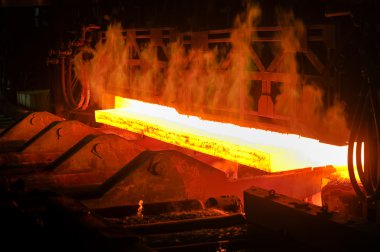
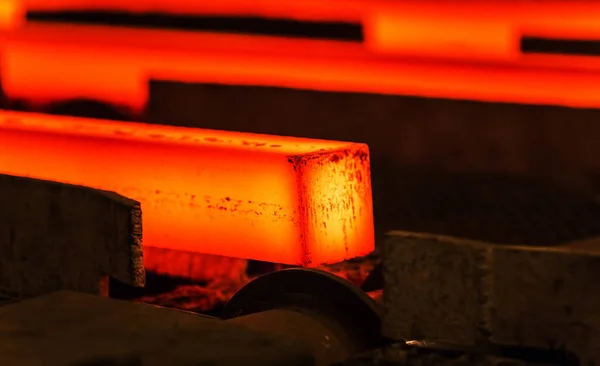
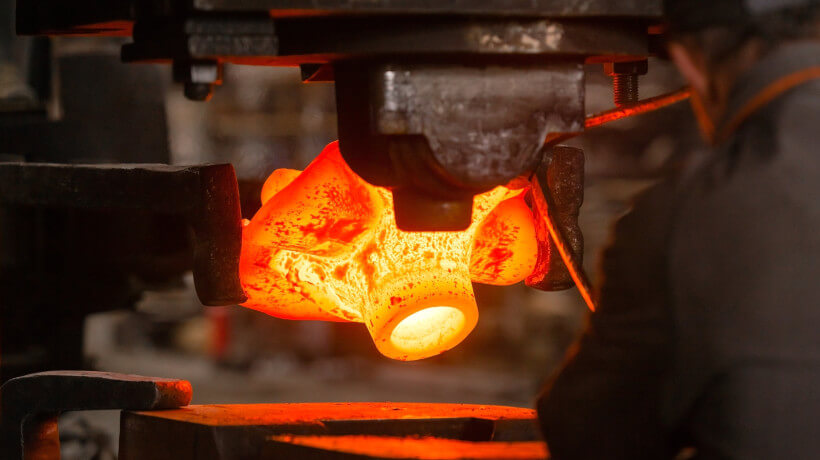
In foundries, mills, forging operations, and other high-temperature environments, identification may need to occur while the material is still hot.
This changes the marking requirements considerably.
The paint or ink must:
1. Be applicable at the required surface temperature.
2. Produce a readable mark.
3. Work with the production marking method.
4. Remain useful through the required portion of the process.
ATP formulates marking paints and inks for both hot and cold marking applications and can tailor formulations to specific end-user processes.
Risk Point 3: The Marking Equipment and Ink Do Not Match
Marking chemistry is only one part of the system.
Industrial operations may use different equipment to apply identification.
ATP states that its custom formulated marking paints and inks are compatible with major marking systems and can be tailored for specific application processes.
This matters because a formulation suited to one application method may not automatically produce the same result with another.
Manufacturers should consider:
- Marking equipment
- Nozzle or applicator
- Surface temperature
- Required line thickness
- Drying behavior
- Production speed
- Substrate condition
The marking material should fit the production method rather than forcing major changes to the line.
Risk Point 4: Stencil Identification Has Different Requirements
Not every mark is sprayed automatically.
Some facilities use stencils for larger identification or specific production steps.
ATP offers Stencil Ink formulated to be brushed or rolled onto surfaces from ambient temperatures up to 650°F.
This provides a different approach from the broader Metal Mark range.
The correct choice depends on how the information needs to be applied and how much thermal exposure follows.
What Information Actually Needs to Survive?
Not every mark needs to remain readable forever.
One identification may only need to survive until the next manufacturing stage.
Another may need to remain visible through multiple heating operations.
Before specifying a marking product, define:
- When the mark is applied
- Surface temperature at application
- Maximum temperature afterward
- Length of thermal exposure
- Substrate
- Application equipment
- Required readability
- When the information is no longer needed
This can prevent overspecifying one application while underspecifying another.
A Marking Paint Can Be Part of Quality Control
Traceability problems are often treated as paperwork issues.
In manufacturing, however, physical identification and documentation are closely connected.
If operators cannot reliably connect the material on the floor to the information in the production record, mistakes become more difficult to prevent.
A durable, readable mark can support:
- Material segregation
- Production routing
- Batch identification
- Inspection
- Inventory control
- Process verification
The exact traceability requirements depend on the manufacturer and industry, but physical identification remains one important tool.
Custom Formulation Matters Here Too
Industrial marking conditions vary considerably.
One manufacturer may mark cold steel.
Another may need to identify hot coils.
A foundry may have a completely different application method and surface condition.
ATP formulates its marking inks and paints around different temperatures, materials, marking systems, and end-user processes rather than providing only one standard marking solution.
That custom capability is important when standard marking products fail at a specific point in production.
Protect the Identity of the Material Through the Process
High-temperature manufacturing should not require manufacturers to choose between processing the material and keeping it identifiable.
The marking system should be designed around both.
At Advanced Technical Products, our high-temperature marking paints and stencils include water-based heat-resistant paints and custom marking inks for hot and cold applications, with Metal Mark products designed for temperatures from ambient conditions up to 2300°F.
By matching marking chemistry, application method, substrate, and temperature exposure, manufacturers can maintain clearer material identification through demanding production environments.